August 2024 Newsletter
Like many people at my stage of life, the summer has involved keeping many plates spinning, with busy days in the office sandwiched between bucket and spade holidays and ice-cream-coated children.

The contrast between the Northern Line and Holkham Beach is akin to the current health trend of suddenly switching your shower dial to freezing (something I have to do while singing to get through the required 60 seconds).
In between our holidays, the Jobs Foundation has had a fruitful month. We are on target to launch our foundational research at the end of October, and we used August to trail the second chapter of this report – Loughborough: Looking to the future – which continues to explore how jobs provide the best route out of poverty and what policy conditions business needs to thrive.
This will be a major theme for us in the Autumn, as we focus on the business legislation announced by the new Government in the King’s Speech, and the Budget on the 30th October. Do take a moment to read Matthew’s recent Sunday Telegraph op-ed on how a thriving business community is an essential prerequisite for the Government to hit their objective of getting two million people from welfare into work.
We also used the summer to continue our programme of company visits, to see the incredible things that businesses are doing for their local communities, and to properly understand the conditions they need to thrive. Matthew and I visited JCB‘s headquarters in Staffordshire, where we were lucky enough to have a tour of their standout Academy, which develops the ‘engineers and business leaders of the future’. And Nick and I visited Thatchers Cider in Somerset, to learn more about their apprenticeship work and see the power of a family business and their role in supporting a community for over a hundred years.
Finally, just before the summer holidays, we co-hosted another packed Jobs Foundation breakfast, this time with the brilliant Finito Education. Our guest speakers were Dominic Johnson, former Minister of State for Regulatory Reform, and Dinesh Dhamija, founder of ebookers, who looked at the vital role of trade deals for the UK. Thanks to these events, we are well on track to reaching 1,000 Business Council supporters by the end of the year.
Lots more to come before Christmas. As Hulk Hogan would say back in the day: “We comin’ for you!”
Best wishes,
Georgiana Bristol
CEO, Jobs Foundation
Loughborough: Looking to the future
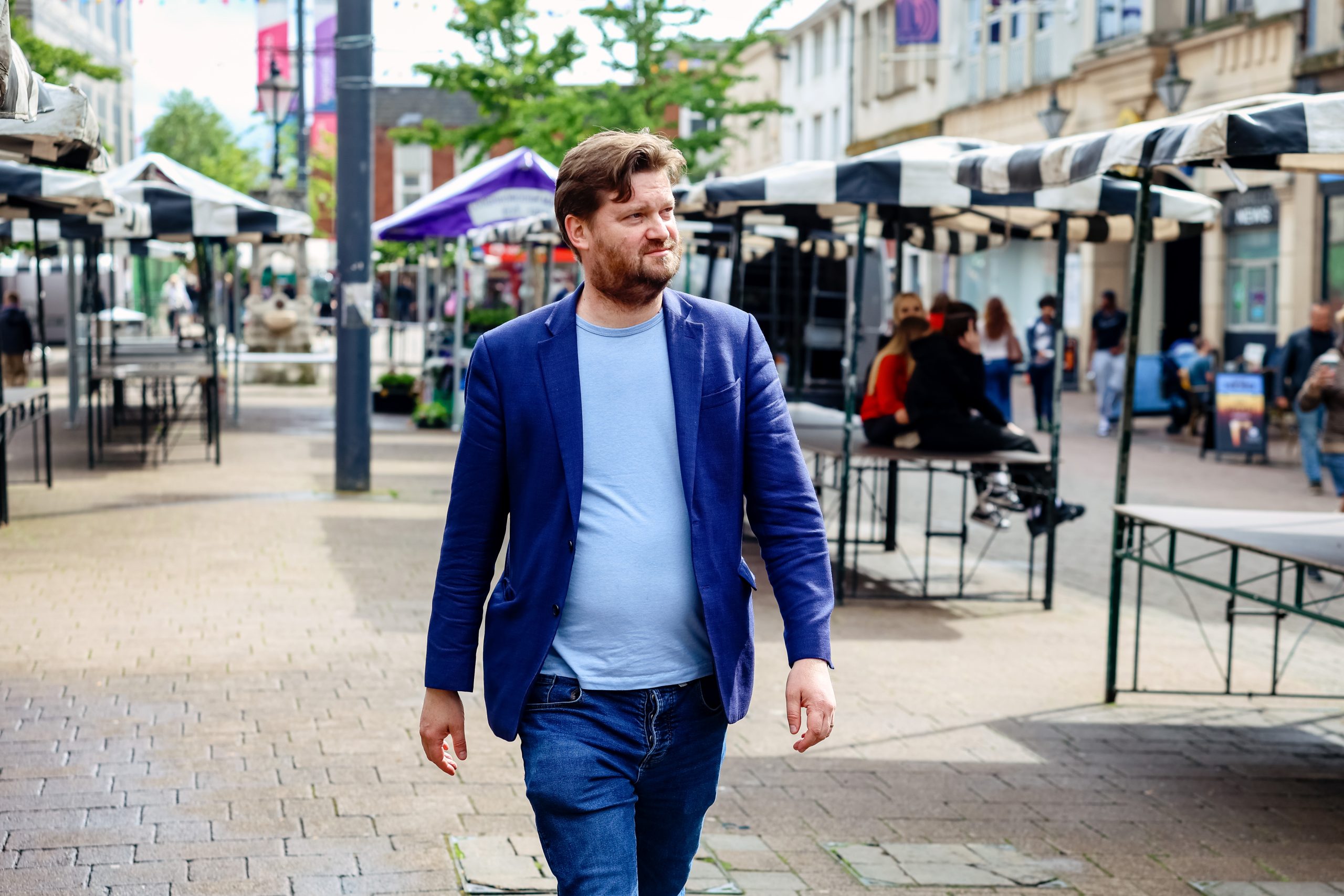
In August, we launched the second chapter of our foundational research on jobs and businesses across the UK. Our first chapter focused on the city of Sheffield. The second looks at the town of Loughborough, and the conclusions are drawn from a series of interviews with business and community leaders in the area.
Loughborough: Looking to the future examines life and business in the East Midlands, and features interviews with those working for one of the region’s largest employers (the global software company, Access Group), many of entrepreneurs behind the leading SMEs in the area, as well as representatives from the Loughborough University and Loughborough College.
Loughborough is a place that knows its strengths and plays to them well. The town is a centre for green energy production (and net zero more generally) as well as sport and sports science. It is a hive of SME activity and entrepreneurship – and a great example of business as a societal good, as we see how having a strong crop of businesses in an area strengthens the entire community in numerous ways.

The next chapter, on the town of Hartlepool, will be released in early September. That will be a look at a town with a very different set of challenges to Loughborough, particularly in terms of moving people out of poverty and into employment. As a coastal community, it offers a unique insight into a particular set of challenges that only affect seaside towns. As always, we would love to hear your thoughts about this chapter and all the other research the Jobs Foundation will be publishing over the coming months. The full chapter on Loughborough can be read here.
Our visit to JCB
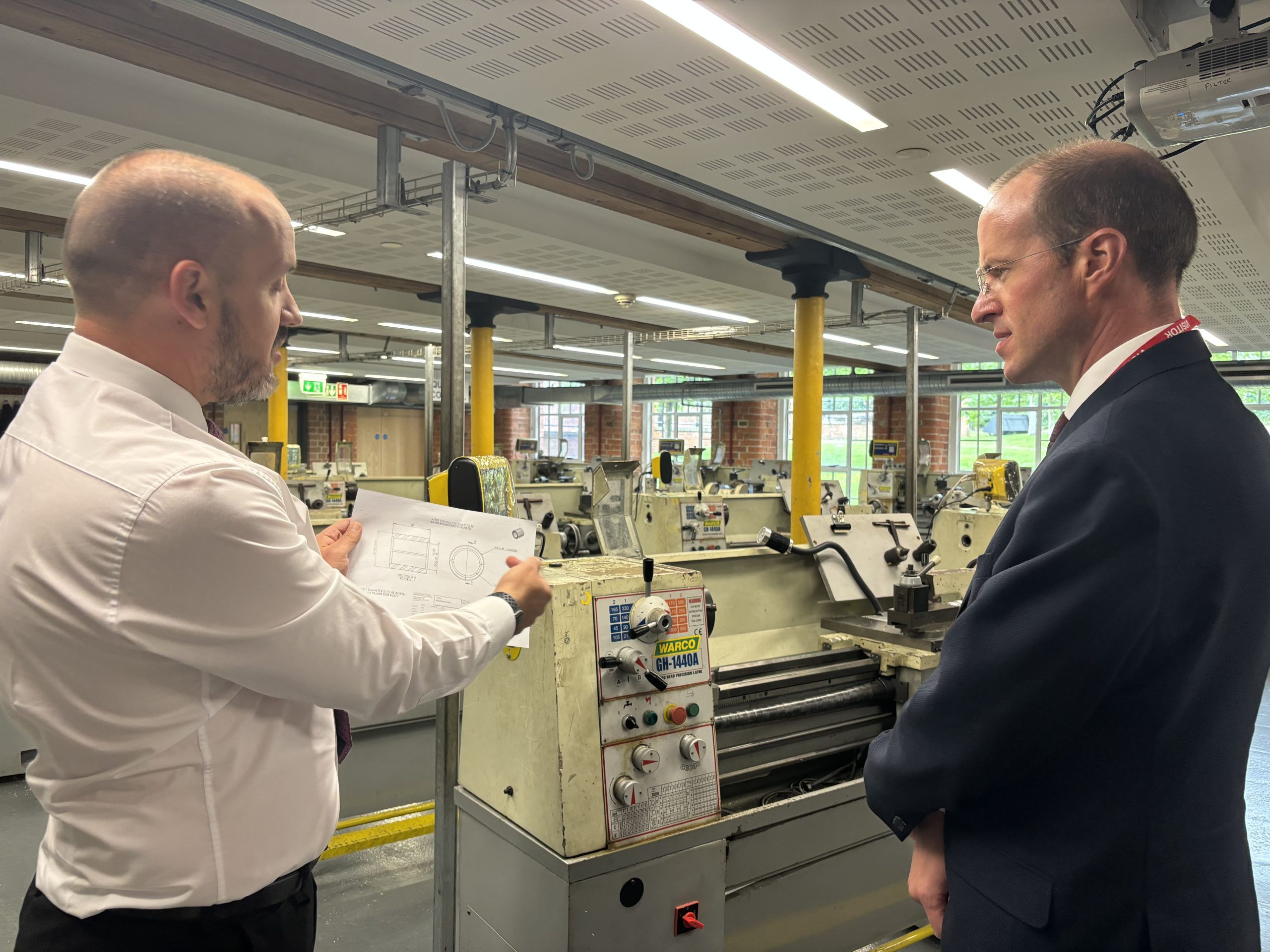
Georgiana and Matthew headed to Rocester, Staffordshire this month, for a tour of JCB’s headquarters. JCB is one of the largest privately owned engineering and manufacturing companies in the UK and the world’s third largest manufacturer of construction machinery, with over 15,000 employees worldwide. An organisation well known for innovation and great training, this trip was an opportunity for the Jobs Foundation to meet with Max Jeffery, Group HR Director, and learn more about the training and skills provided at JCB.
We were taken on a tour of the JCB Academy (for 13 to 18-year-olds), which is focused on developing ‘engineers and business leaders of the future’. The Academy is sponsored by JCB and other businesses including Bentley Motors, Network Rail and Rolls-Royce, who together develop a unique curriculum designed to ensure young people achieve top grades and develop the key skills essential for success in the world of work.
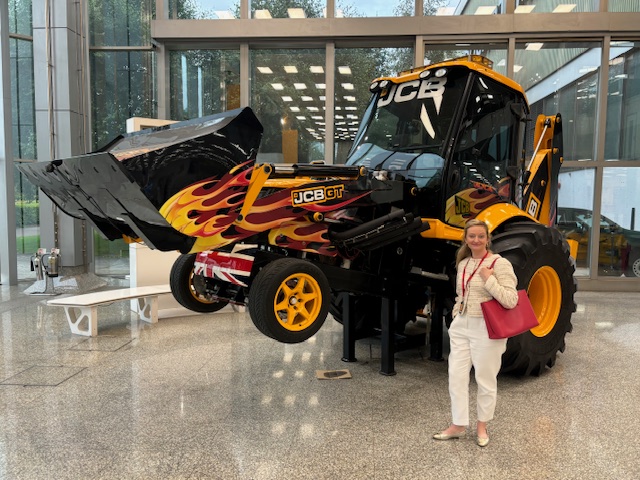
It was explained that the ethos of JCB is ‘always looking for a better way’, a manner of thinking that goes to the heart of the organisation’s success, not just in terms of the quality product they produce, but the training and employment they provide. The Jobs Foundation took a huge amount away from this trip and looking ahead to 2025, as we develop an employment and skills best practise resource for our Business Council, JCB is a fantastic example of an organisation focused on innovation, great jobs and how to equip the next generation for a rapidly changing world.
Our breakfast with Dominic Johnson and Dinesh Dhamija
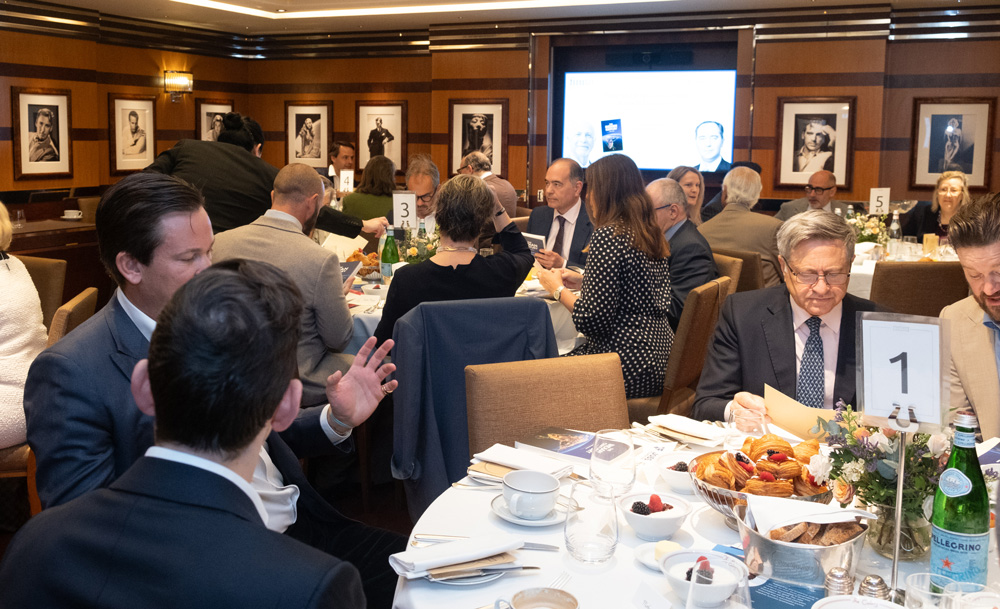
We co-hosted with Finito a morning event with guest speakers Dominic Johnson, co- founder and CEO of Somerset Capital Management, as well as a former Minister of State for Regulatory Reform, and Dinesh Dhamija, founder of ebookers, former Liberal Democrat MEP and most recently author of “The Indian Century”, a compelling vision of India’s rise as a global powerhouse. Both speakers kindly shared with us their insights into the worlds of business and politics, having been involved in both.
Dominic Johnson spoke about the recent loss the Conservative Party had suffered at the General Election. He said that after more than a decade in government, the Conservative Party hadn‘t managed to lower tax or regulatory burdens sufficiently. He also felt that the Conservatives needed to have taken much more advantage of Britain being able to make our own trade deals over the last few years. As championed by Dominic in his former position, business remains the backbone of both the British economy and society (reinforcing the Jobs Foundation’s mission that business is a societal good unto itself).
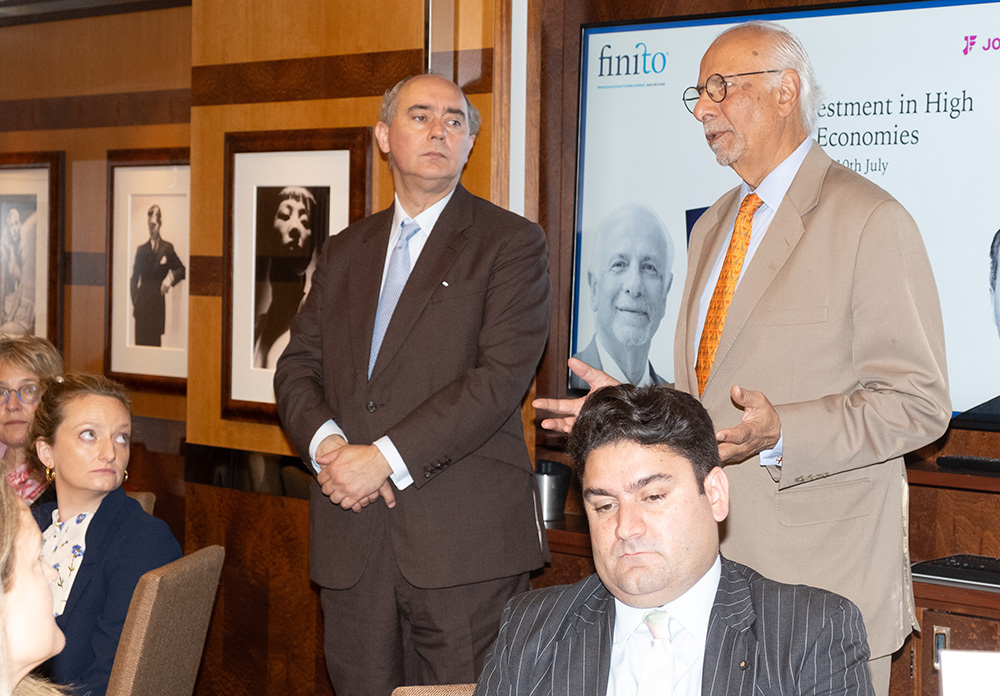
Dinesh spoke about the value of British entrepreneurism and ingenuity. He also emphasised how important trade deals are for the British economy, citing how he feels a trade agreement with India in particular could generate a jobs boom of 300,000 in the UK. He also touched upon his own journey as an entrepreneur, explaining how he saw the internet developing in the early 21st century and discovered ways to innovate and capture the market.
Our next breakfast will be with journalist Gabriel Pogrund, Whitehall Editor of the Sunday Times and author of “Get In: The Inside Story of Labour Under Starmer”.
A visit to Thatchers cider

Thatchers is a family run business which has been going for 120 years. Eleanor Thatcher, the current director of Thatchers and great-great-granddaughter of the company’s founder, William Thatcher, showed us around the company’s HQ, set on Myrtle Farm in Somerset.
“In terms of being a family business, we really care about we do. This is more than just a job for us – it’s a way of life,” she said, as Eleanor took us around one of the orchards where the apples that go into Thatchers cider are grown. Following that, we were given a full tour of the manufacturing facilities, seeing how the apples eventually become the bottles and cans of cider that sit upon supermarket shelves across Great Britain.
Thatchers employs around 250 people, almost all of them local to Myrtle Farm. It runs an extensive apprenticeship programme with some interesting facets, including the apprentices having both a regular line manager for day-to-day work, as well as a separate apprenticeship manager, someone who can help them with the aspects of the job specific to being on an apprenticeship. Another great aspect of Thatchers’ apprenticeship scheme is that they ask the apprentices to prepare a presentation about how to improve the business – which they are then asked to present to the board.
“They are usually nervous beforehand,” Eleanor said. “But then once they’ve done it, they always talk about what an amazing experience it was for them.”
Eleanor is optimistic about the future of Thatchers. Like so many business owners across the country, she finds hiring people at an early age and bringing them up in the culture of the company helps create the managers of the future – and that giving young people a good start in life with a good job is a key aspect of what makes businesses like Thatchers a societal good, above and beyond whatever else the company does for their community in other ways.
Our business person of the month: George Oliver of 1284
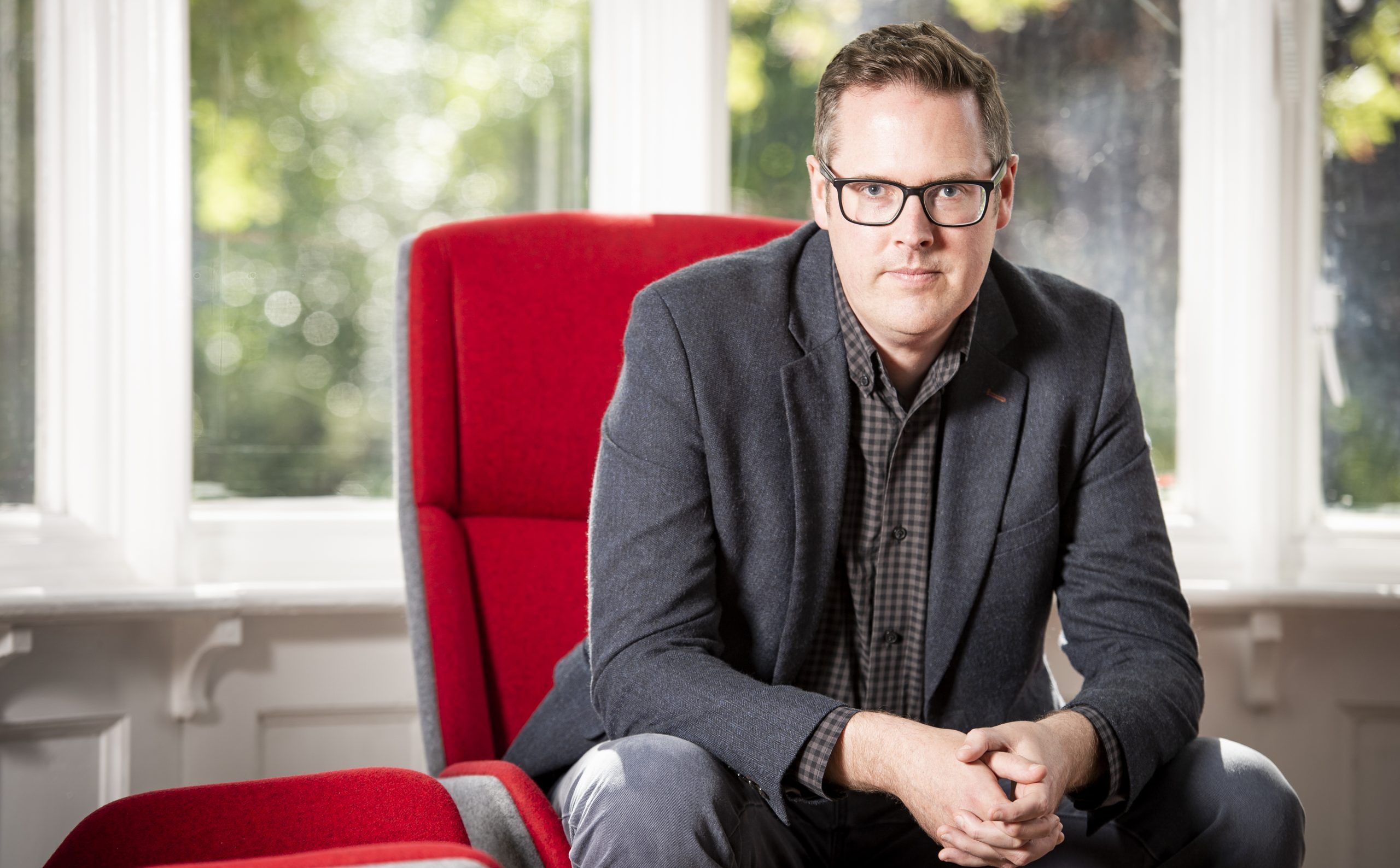
1284 was founded by George using nothing more than a laptop and a phone. Four years later, they were employing five people, moving into bigger office space, and shortlisted for UK Specialist PR Consultancy of the Year.
The company’s speciality is using B2B and G2B strategic communications to promote East Midlands small business innovation. They are also interested in regional economic development. 1284 provides purposeful corporate communications, public and media relations, and effective copywriting.
The company grew out of a Loughborough incubator and remains rooted in the town. 1284 sponsors the village football club, as well as the borough council’s annual Community Heroes Awards. They have a wide and supportive professional network in the town, and its location is central (literally and metaphorically) to 1284’s work across Leicestershire, Nottinghamshire and Derbyshire.
You can read George’s full story here on our website.