Barnardo’s training schemes – giving young people from deprived backgrounds a fighting chance
We visit Swansea and Manchester to look at how young people are being supported into work.
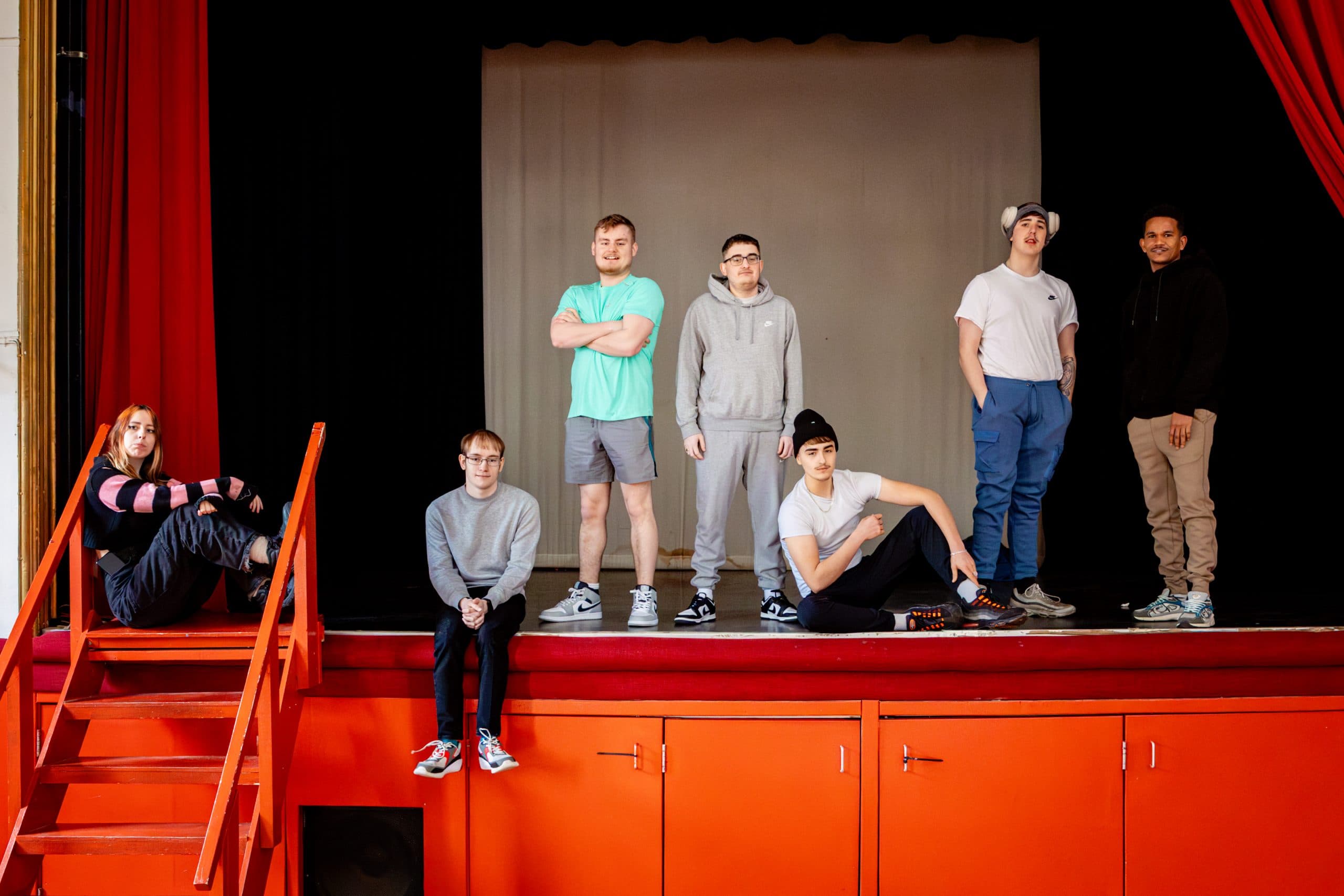
The Jobs Foundation recently travelled to Swansea as well as Ashton-under-Lyne, looking at two of the training schemes run by the charity, Barnardo’s. The site in Wales is a way into employment at Amazon; the scheme run just outside of Manchester is a route to working at the local IKEA.
Both programmes operate along the same premise: that people from particularly difficult circumstances and backgrounds need some basic life and work skills before they can begin in either part of full-time employment. In cohorts of ten to a dozen, young people come in every weekday for eight weeks in order to learn the following: the importance of arriving on time, how to work with others in a team, what attitudes are required when in employment, how to navigate a job interview (everyone who goes through the programme and stays with it until the end will be interviewed by the prospective employer, be it Amazon or IKEA).
![Barnardos 1[30]](https://w5jld70ls6ld9yag.public.blob.vercel-storage.com/wp-recovery/2025/04/Barnardos-130-scaled-kv8psVoJBs3iZjMV2Uul2dGOPxdnhP.jpg)
It is also often trying to build up a trust in authority figures that had been missing in the young people coming onto the programme’s lives until that point. Often, the people providing the training for Barnardo’s come from similar backgrounds to the kids coming in to hopefully get a job, which helps bridge this gap.
‘My first job was an apprenticeship,’ Angela, one of those who run the programme in Ashton, told me. ‘I was given a choice of a few things I could do – I chose the catering one because it was in my old school, so I was familiar with the building. And I’d been volunteering in the cooking classes in youth club, helping the teachers.’
What she told me next has stuck with me since.
‘That was the thing that changed my life. I loved it. I always loved learning, but I hated school because I had a rough time there. But yeah, that job really changed my life.’
![Barnardos 2[63]](https://w5jld70ls6ld9yag.public.blob.vercel-storage.com/wp-recovery/2025/04/Barnardos-263-scaled.jpeg)
Angela worked in many sectors across her career – but eventually wanted to give people in the same situation, in the same area as she had been in the chance of that life changing opportunity.
Andrew Hopkins, the man who was running the programme in Swansea when we visited, told us of the amazing transformation almost every young person who comes onto the programme experiences over the course of the eight weeks.
‘It’s confidence that’s the main thing with people when they first come in. Lack of understanding, questioning. We get them to always question why when it comes to difficulties they face in their lives. Then they can look for solutions. But after eight weeks here, the group is almost totally unrecognisable. The growth in that time is always astounding.’
The importance of programmes like the ones Barnardo’s run for Amazon and IKEA can’t be understated. If we want to get two million more people into work, it is exactly the kids that enter such a programme – who take that first big step that might end up changing their lives – who are the ones we need to ensure get into meaningful employment. What we witnessed in Swansea and Ashton were more amazing examples of business as a societal good, creating the jobs that lift people out of poverty.