July 2024 Newsletter
July has seen the Jobs Foundation move into a new phase of its development.

July has seen the Jobs Foundation move into a new phase of its development, as we released the first chapter of our foundational research, Sheffield: Forging steel and embracing tech. We began work on it last year, and it included visiting the city on multiple occasions and interviewing hundreds of entrepreneurs, CEOs, local politicians and community leaders. It lays the foundation for explaining how successful societies require successful businesses, and the findings feed into two important policy chapters of the foundational research on how jobs provide the best route out of poverty, and what policy conditions business needs to thrive.
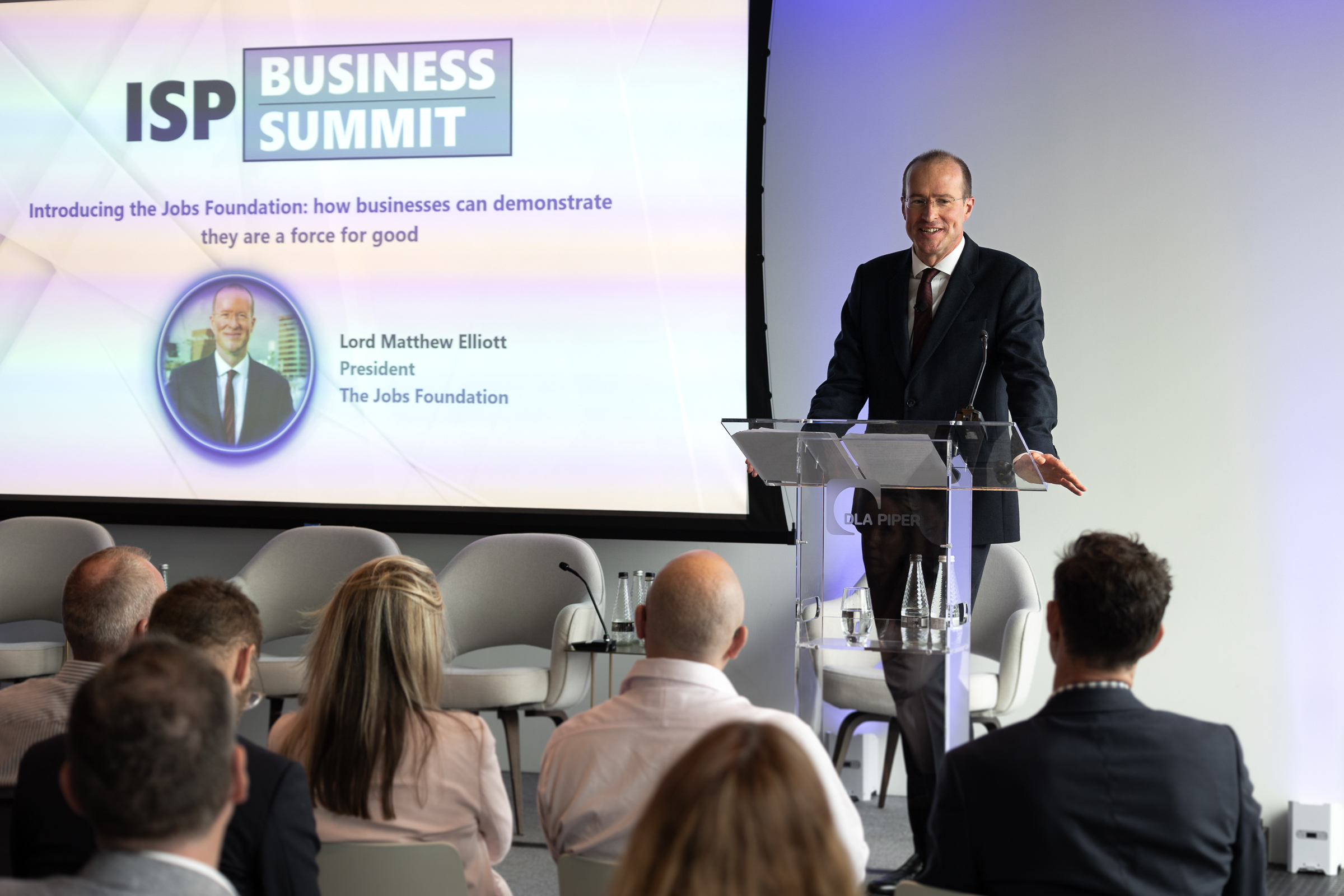
Our president, Lord Elliott of Mickle Fell, gave two key speeches this month, showcasing the charity and our message to new audiences. The first was at the annual conference of ISPA, the Internet Service Providers Association, the second was in the House of Lords in economics and employment section of the King’s Speech debate. These are the first of many interventions designed to get our message out in this important post-election period.
We also hosted a breakfast with guest speaker Polly Mackenzie, former deputy head of policy in No 10 Downing Street.
We will be in touch in August with the next chapter of our foundational research, but in the meantime, we hope everyone has a relaxing and restful summer.
Very best wishes,
Georgiana Bristol
CEO, Jobs Foundation
Sheffield: forging steel and embracing tech

After months of work, interviewing over a hundred business owners, employees and local stakeholders, the Jobs Foundation is proud to launch Sheffield: Forging tech and embracing steel. It is the first in a series of regional chapters that will form the basis of our foundational research on the state of business and jobs across Britain, to be released in October.
The Sheffield chapter is an in-depth look at a British city, both the reasons to be cheerful about how business is doing in a major British conurbation but also the challenges that lie ahead. It is an on the ground piece of research, featuring insights from dozens and dozens of businesses and other organisations within the city. It also a great example of why the Jobs Foundation’s founding principles are correct: successful societies require successful businesses, and how jobs are the best route out of poverty.
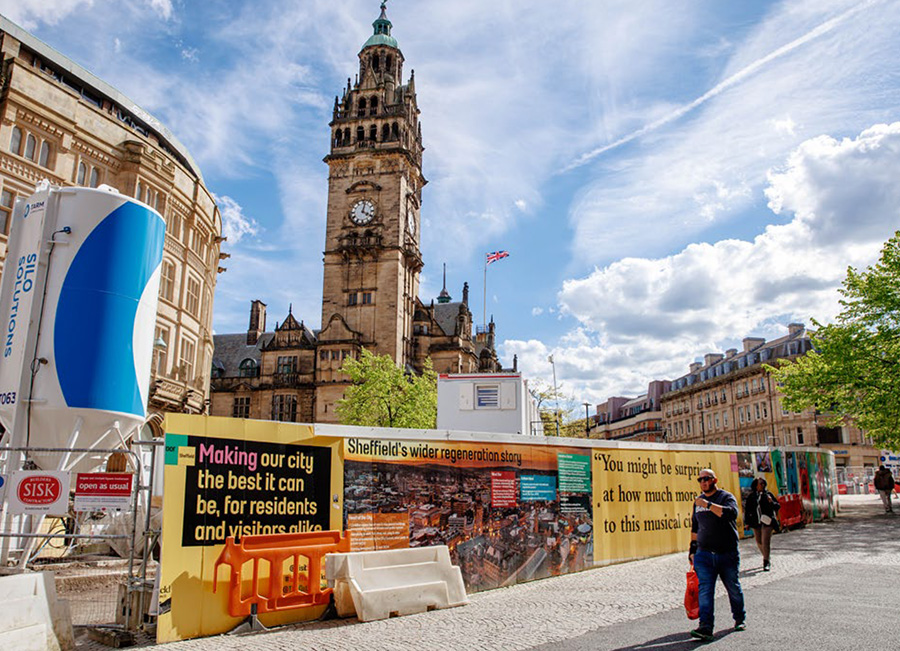
The chapter looks at both the clash between the old and the new in the city – steel and other traditional sectors of the economy versus tech – but also how the old and the new compliment each other and dovetail. For instance, many smaller tech start ups get a lot of their initial business from traditional, larger companies; likewise, one of the ways that traditional sectors like steel can remain competitive in an era of increased international competition is by embracing the latest technology.
We had a media launch of the paper in Sheffield this month, with the Yorkshire Post running an comment piece from Nick Tyrone about its findings. Nick also appeared on the podcast, Steel City Business, talking about what he found in Sheffield and what the wider implications of that are, which can be listened to here.
If you want to read the report in full, it can be found here. Next month, we will be launching the next report in this series, this one called Loughborough: Looking to the future. Like its Sheffield counterpart, this second chapter will be an in-depth look at an area, this time a town in the East Midlands.
Making the case
Our president, Lord Elliott of Mickle Fell, gave two important speeches this month, each of them making the case for why jobs are the best route of poverty, why business is a societal good, and what conditions are needed to ensure that business can thrive.
The first was at the annual conference of ISPA, the Internet Service Providers Association. Lord Elliott spoke about the role of Jobs Foundation in supporting more people into employment through the dynamism of business and entrepreneurship.
“In this vein, I believe unequivocally that business has had a profoundly positive impact on modern society. Alexander Graham Bell created the first precursor to fibre-optic communications – the photophone, in 1880. In 1973, Corning Glass signed a contract to test fibre optics in an urban environment. And Vinton Cerf and Bob Kahn invented the protocols that we use to this day to connect large scale computer networks. This is why I look at entrepreneurs today, and marvel at what they have in store for us tomorrow.”
The other key speech from our president was in the House of Lords, in the King’s Speech debate. Lord Elliott spoke about bringing two million people into employment.
“When the Government published their manifesto, a good deal of attention was rightly given to their commitment to economic growth and wealth creation – two priorities I heartily support. But their manifesto also included a less publicised but equally welcome pledge to increase the employment rate of the UK from 75 per cent to 80 per cent, bringing two million more people into the workforce. This is an important priority for both our economy and our society.”
The Jobs Foundation is moving into its post-election phase, making the case for its issues in the new political terrain, in rooms filled with business people, as well as in the Houses of Parliament.
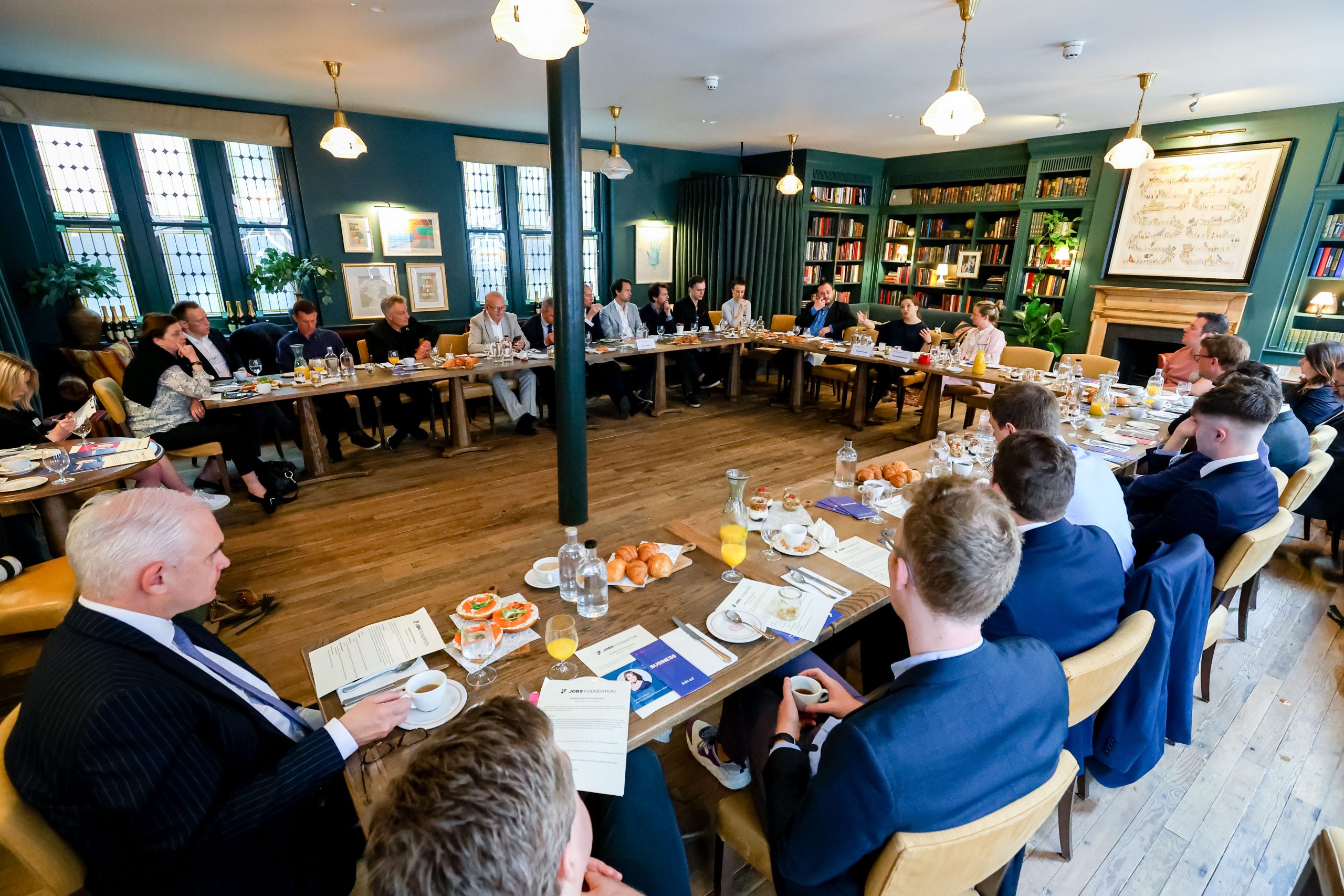
Our breakfast with Polly Mackenzie, former Deputy Head of Policy in No 10 Downing Street
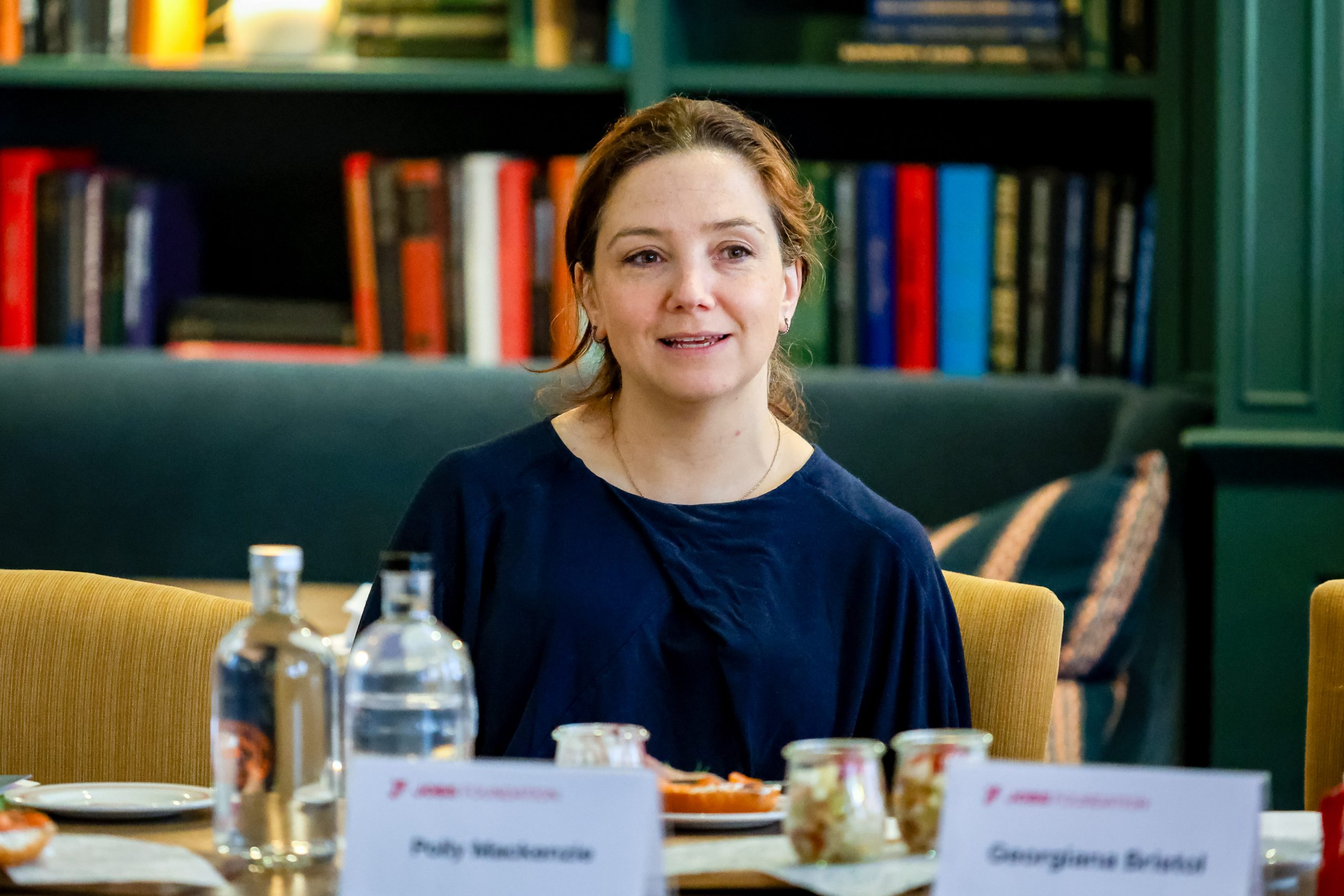
Polly Mackenzie has enjoyed a highly successful career as a business journalist and Policy Advisor, most notably her tenure as the Deputy Prime Minister’s Director of Policy between 2010 and 2015. Following her time in government, Polly served as the Chief Executive of the UK’s leading cross-party think tank, Demos. As one of the most experienced political strategists in Britian, Polly has earned her the nickname ‘Policy’ on the Times’ weekly podcast ‘How To Win An Election’, where she sits alongside Peter Mandelson and Daniel Finkelstein. She is currently the Chief Social Purpose Officer at the University of the Arts London.
In the latest of our series of breakfasts, Polly talked to us about Cool Britannia 2.0: creative industries, the upcoming 2024 general election, and the jobs of the future. Her experience serving in the coalition, and think tanks, has led Polly to see how integral and innate to UK identity creative industries are. She hopes the current government can help create an environment in which the arts can thrive. Right now, there are flaws in the system, with short contracts, a lack of employers, meaning that only people with social and financial capital are willing to take the risk, something Polly sees clearly due to her work at UAL.
Our business person of the month: Idy Udo, 4C Hotel Group

“My core role is about people. The employees of the company, their needs, how they fit into the organisation, how the organisation can make them feel at home and support them in giving and achieving the best of themselves at work.”
Idy started at 4C Hotel Group about nine years ago, in a PA capacity. She has moved up the career ladder since then, getting greater and greater responsibility with every step. The 4C Hotel Group are now one of the Top 30 places to work in hospitality in the UK – a position she us proud of – but wants to keep improving on.
Idy is responsible for things like the company’s graduate programme, helping people into the workforce out of higher education, and making sure 4C gets the best and the brightest coming into employment. She also looks after the leadership programme, looking for employees with high potential levels and giving them the tools to succeed. Promoting from within is important to her, not just because it was Idy’s own personal path, but because it’s best practice. If employees see that they can get internally promoted, it motivates them to work harder, and to stay with the company, instead of feeling that they have move to advance.
You can read Idy’s full story here.