Our visit to Harwin Plc
We visit Harwin Plc, a leading manufacturer of high-tech connectors used in drones and satellites, amongst others.
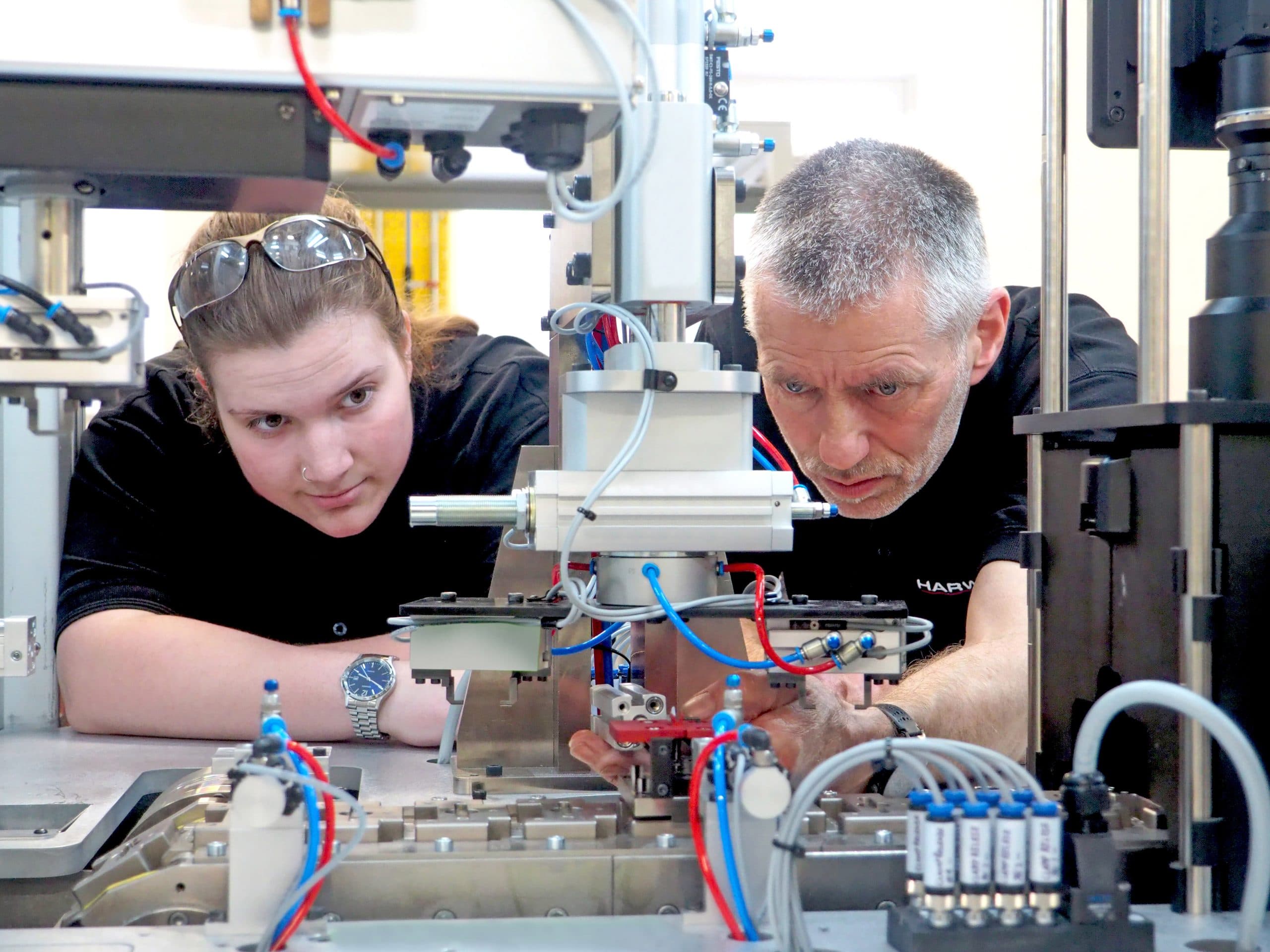
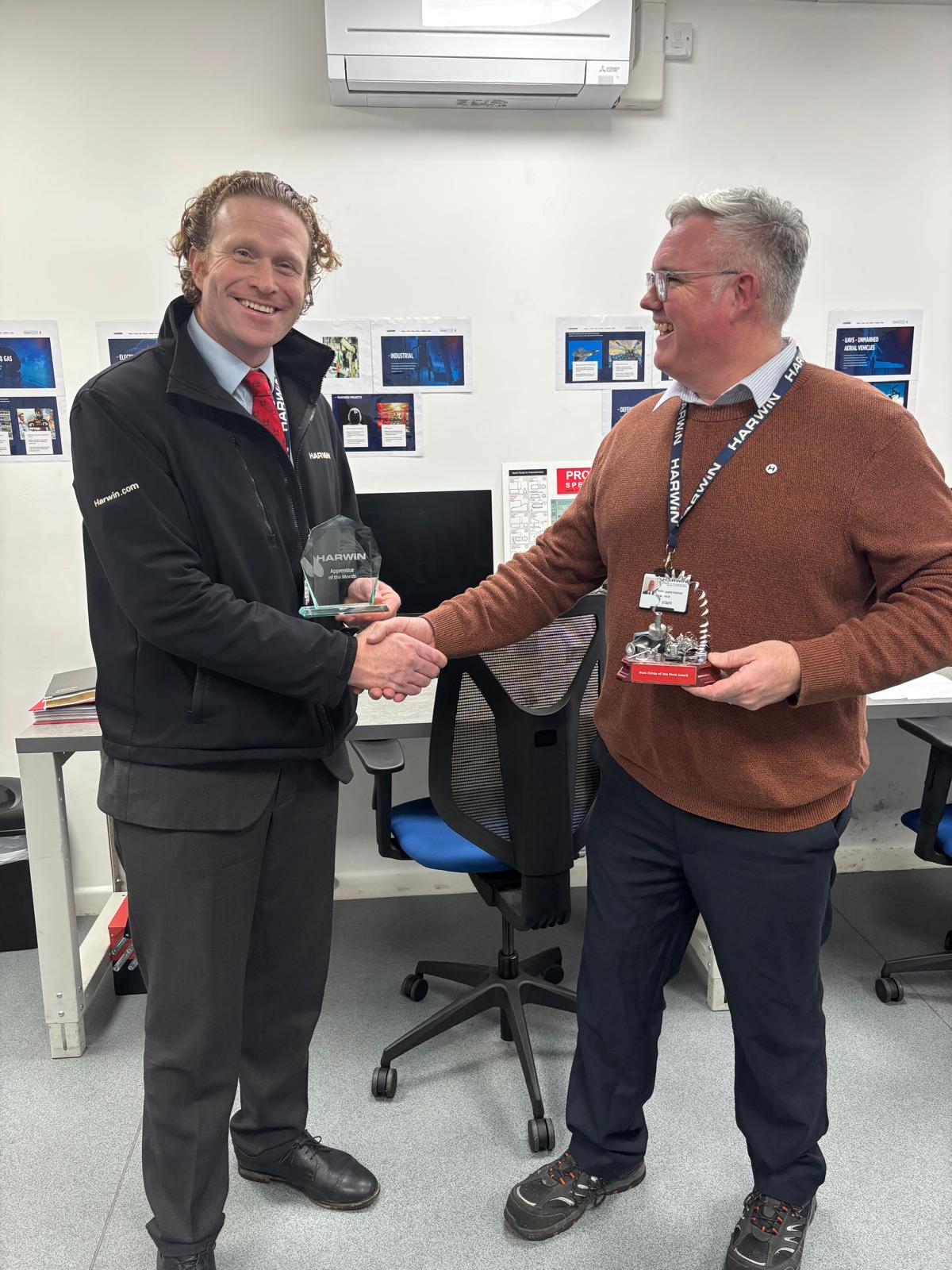
Our CEO Georgiana asked William de Laszlo (Chairman, Harwin) if his children would someday work at Harwin too, to which Will replied bluntly: “Only if they are good enough. The work at Harwin is hugely demanding, and we have an incredible workforce who rely on the success of the business.”
Late last month, the Jobs Foundation had the pleasure of visiting Harwin Plc at their Portsmouth HQ and factory. Harwin are a family-run business, designing and manufacturing high quality connectors that are used in everything from electric cars, to ventilators, to satellites and planes. They employ around 300 people, with 75 per cent of their products designed and manufactured in the UK.
Harwin has run its apprenticeship programme since 2002, and in 2018, undertook a multi-million-pound investment in their own on-site training academy. This commitment was in response to the skills gap the business could see coming down its talent pipeline. With many highly skilled employees approaching retirement, Harwin recognized the importance of building a strong talent pipeline to ensure continuity and expertise within the workforce. The investment is significant, with approximately £100,000 required to support each apprentice through the programme, but the long-term benefits far outweigh the cost. Today, nearly 50% of Harwin’s employees have come through the apprenticeship route.
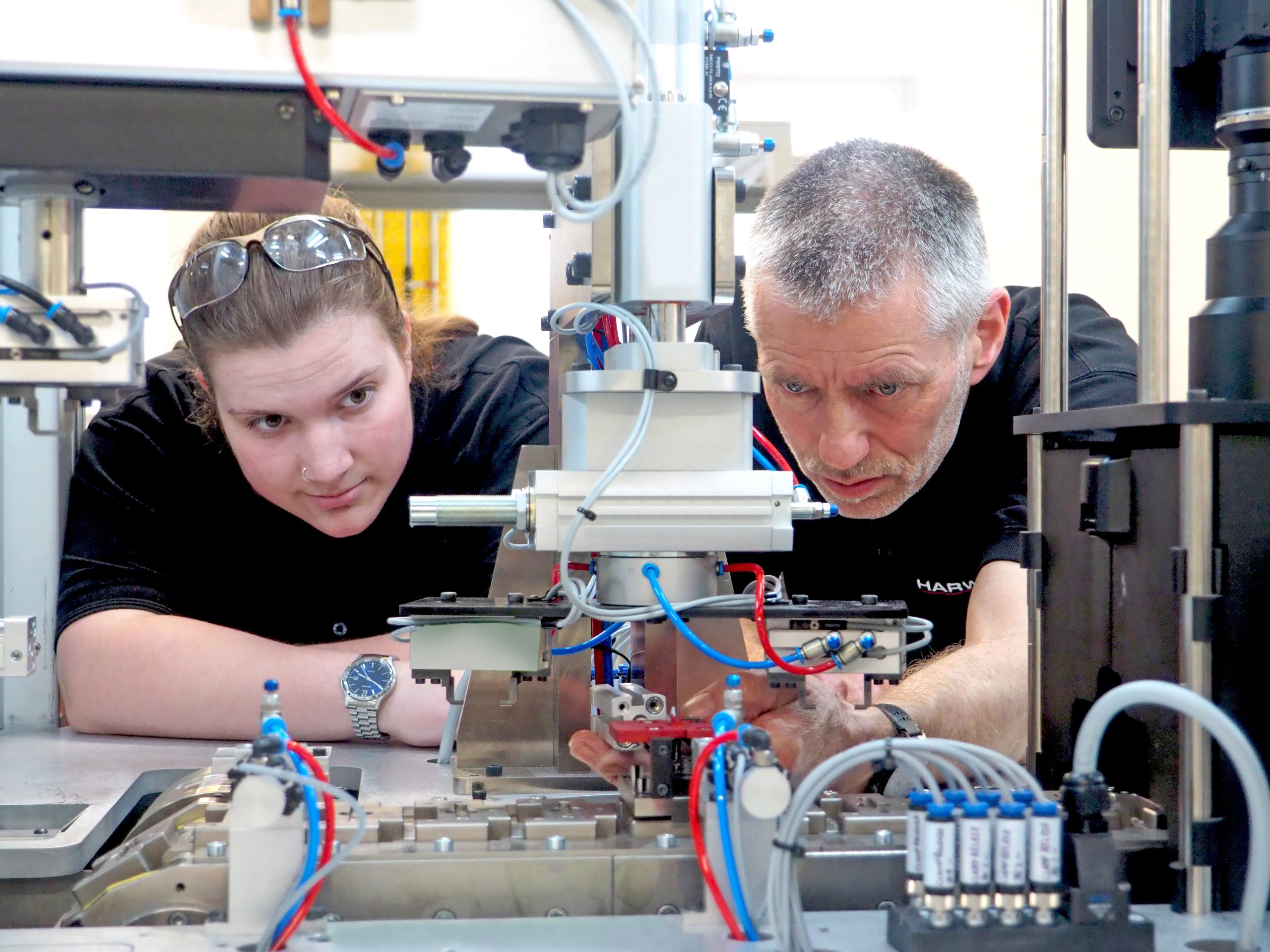
The Harwin Academy was designed as a response to the growing gap between what students learn in classrooms and the skills required in the fast-paced world of modern engineering. Instead of relying solely on traditional recruitment methods, Harwin decided to build their talent pipeline from the ground up, meaning that they were able to shape the scheme to meet their bespoke needs. Bringing their academy in-house, gave them an even greater ability to deliver the training and support especially tailored to the work that Harwin does.
This partnership meant that students wouldn’t just learn from textbooks—they’d gain real-world exposure, starting on the factory floor of Harwin’s high-tech Portsmouth headquarters. The Harwin Academy is designed around a structured two-year course that bridges academic theory with practical work. Students spend part of their time at a local college campus, where they’re immersed in core engineering principles like design, materials science, electronics, and manufacturing processes. But what makes this program special is how seamlessly classroom theory translates into hands-on work at Harwin’s facility.
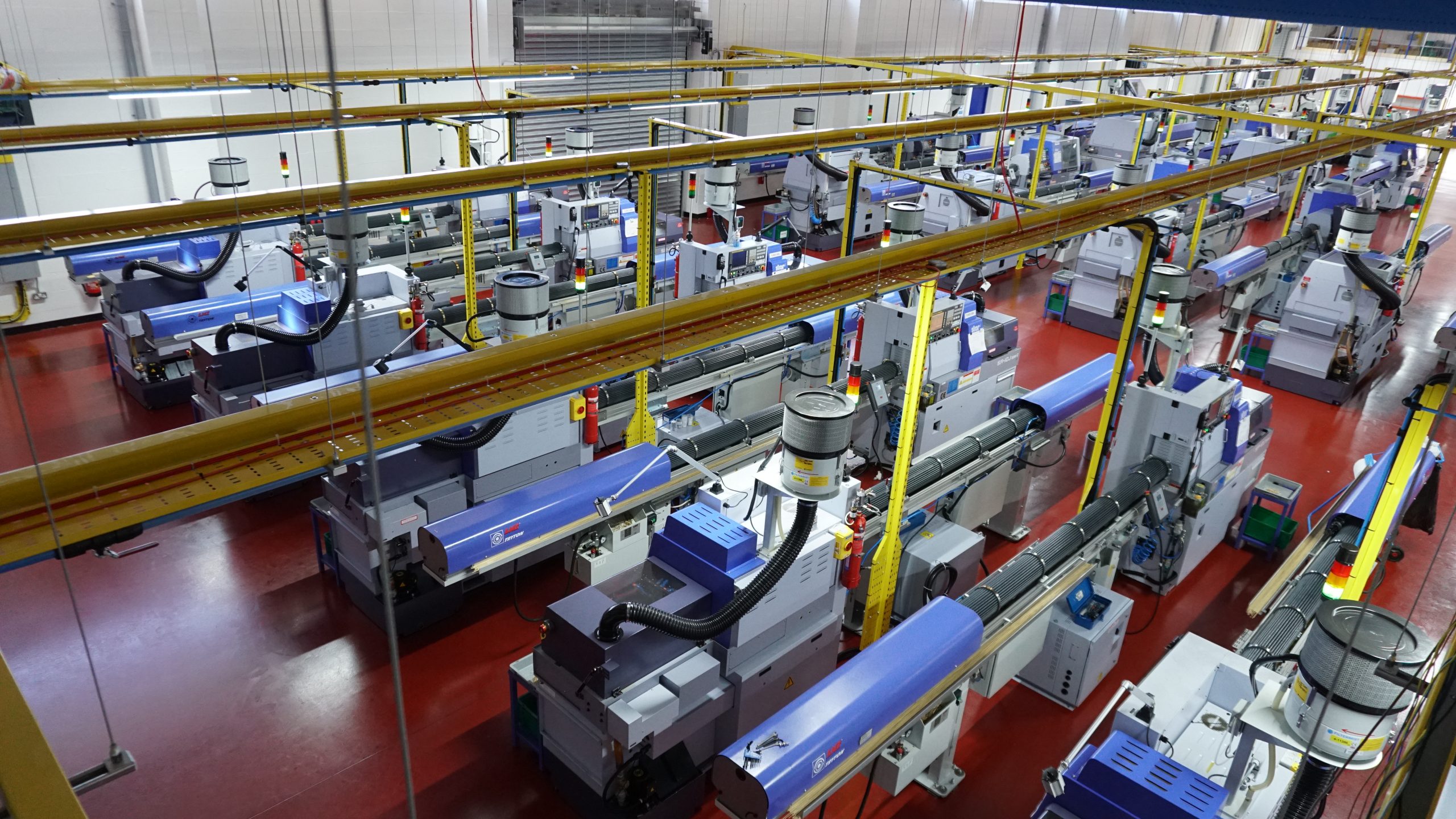
Harwin has a bespoke ‘campus’ for students of the Harwin Academy on their site in Portsmouth, including a classroom, kitchen, and a full workshop room including a range of cutting-edge CNC machines, lathes, and everything else that one would expect to see in the most modern factories –this means their students have much greater access to the equipment needed to learn their trade than they would have access to at college. This is completely integrated into the broader Harwin factory, with apprentices surrounded by people who have previously been through the scheme, acting as role models for them to look up to and learn from, and spending time every week in the manufacturing facility.
Perhaps the highlight of our visit was spending time with Gareth Pountain, a former Royal Navy mechanical trainer, who now works with Harwin as their Engineering Training Manager – responsible for running the Harwin Academy. As part of his role, Gareth takes the lead on developing the curriculum for apprentices on the scheme, recruiting each intake, and the actual day-to-day teaching in the workshop of each project that is especially designed to teach the apprentices the skills that they will need to thrive in the business. What comes through so strongly is Gareth’s commitment to each apprentice on the scheme – he sees his job as going above and beyond to make sure that every apprentice has the ability to go as far as their talent and effort will take them, and anybody would be lucky to have him as their teacher.
There are currently five apprentices per bi-annual intake on the scheme, with plans to expand the annual intake to 20 apprentices per year. From the outset, the vision for the Harwin Academy has been not only to develop apprentices for Harwin but also to support future engineers by providing maximum exposure to multiple engineering roles to help shape their careers. Indeed, not every student that passes through the Harwin Academy will go on to work for Harwin once they complete the scheme. However, Harwin sees part of its role as cultivating talent, providing it’s trainees with the skills and motivation to carry on the tradition of the south of England being a hub for high-value manufacturing.
From our tour around Harwin, we met so many current staff who had begun their careers on Harwin’s apprenticeship scheme, with Harwin’s culture being to promote internal talent as far as possible. Ben Manns, Executive Engineering Manager for example, has taken himself through an apprenticeship with Harwin, completing a Masters’ Degree in the process, and now sits on the Senior Leadership Team, encouraging other younger employees to follow his path.
Harwin face a number of policy challenges. The UK’s complex regulatory environment for planning and building has significantly impacted their ability to expand their factory. They’ve just broken ground on a massive expansion of their factory, although the process for this is long – with the most recent delay being because of the unfounded risk that there might be eels living under the soil on their site. Nonetheless, through both their impressive apprenticeship scheme and their commitment to expanding their factory, Harwin are looking to the future.